Saturday, February 18, 2006

Tar Sands Threaten Canadian Sovereignty

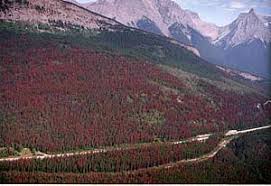
I read an interesting piece that highlights the American perspective on Alberta's tar sands. George Bush's declaration to end America's "addiction" to foreign oil was supposed to be a plea for new energy alternatives, while instead it has increased the focus on Alberta's oil deposits. 60 Minutes did a piece that offered Alberta's oil as America's energy savior, while daily news publications tout the possibilities moving forward. The Americans seem to forget that Alberta is "foreign", instead they seem committed to ensuring that the oil flows south, and south only.

Arguments like this, even though tongue and cheek, reveal the challenges ahead for Canadian sovereignty:
Last month, Canada threw out its namby-pamby liberal government and ushered in a new era of conservative rule. Thank goodness for small favors. Now when we run out of crude oil and natural gas down here in the United States, we won't have to invade our neighbors to the north to make sure the lights stay on. We can just arrange a friendly annexation.

O Canada! We love your beer, your funny accents, your flag with the botanical theme. Now be a dear and just let us have Alberta. Hey, it's just one province. You have nine more, plus three territories. You can keep the ones named after a dog (Labrador) and an SUV (Yukon) and all the rest. We just want the one with those nasty, dirty tar sands. We'll practically be doing you a favor...

You may have heard that President Bush, in his State of the Union address last week, mentioned that the U.S. must slash its dependence on oil from "unstable nations" in favor of cute little science projects like ethanol, nuclear plants and solar panels. But surely you knew that was sort of an inside joke. Most of those projects are a decade away from viability.

What he really meant was that we'd rather strip-mine our BTUs from the perfectly stable Alberta tar pits, which are so close to home that they might as well be ours.

Dick Cheney wants to visit the tar sands. Alberta has an office in Washington. American investors are encouraging Americans to get a piece of the action. The tar sands have inspired frenzied debate, and clearly America is betting its future on Canada. I see a scenario wherein American companies attempt takeovers to secure control. The lure of money will entice Canada to encourage more American investment, a "partnership" will evolve. The goal will be extraction, with little consideration for the long term consequences to Canadian sovereignty.

Americans are treating these oil deposits as if they are there own, and once a dependency takes hold, it will compromise Canada's independence. We have already seen early warning signs, that oil money translates into a province assuming supposed federal roles. Alberta's Klein found it necessary to reassure Americans that our policy on Iraq wasn't necessarily a reflection of his province's views. Canada's ability to forge an independent vision is handicapped by our "co-operation" with America.

Despite the current scenario, where "the west is in", practically, as a matter of population, future Canadian governments will always slant east. We can reasonably expect situations where Albertans continue to feel alienation, where their voice is marginalized. Couple this reality with the hyper friendly Americans, offering bags of money and goodwill, and you can see the temptations. Conventional wisdom usually looks to Quebec as the main threat to a future Canada. I would suggest, as tar sand potential becomes reality, Canada will face its greatest threat as Alberta is Americanized. The appearance of innocuous deals and mutual benefits, belies a threat to Canadian sovereignty. I fully expect the Americans to exploit Canada's "internal" issues to their benefit, just as they do now throughout the world.

Friday, February 17, 2006

Ridiculous

New Environment Minister Rona Ambrose is set to succeed Stephane Dion at the UN as president of The Conference of Parties, which will oversee further implementation of Kyoto. How can Ambrose assume this important role, when she is on record criticizing the Accord she will oversee:
But despite the appointment, Ambrose did nothing to diminish the perception that the Conservatives aren't committed to the agreement.

"We are a signatory to 59 international agreements that I'm learning about all the time and a lot of them we're very active in," said Ambrose, an MP from Edmonton.

"On Kyoto, I will tell you that our government and our prime minister is very clear that there has to be a direct benefit to the Canadian environment and potentially to Canadian commercial investment in clean-air technology."

Ambrose said the government will pursue elements of the Kyoto protocol that fit within her mandate to focus on domestic air pollution.

The use of emissions credits under Kyoto to offset over-production of greenhouse gases is a problem for Ambrose.

"There will not be opportunities under this government, unlike the previous government, to purchase hot-air credits and allow Canadian companies to pollute on Canadian soil," she said.

Harper allowing Ambrose to replace Dion is akin to the American administration appointing John Bolton as U.N ambassador, despite his clear contempt for the organization. What will other nations think of a key player who isn't committed to the process? Mixed messages anyone? How will someone who is clearly in bed with Alberta oil and gas approach these issues in good faith?

Despite all the hot air about "domestic solutions", Ambrose's agenda is clear- don't allow any treaty that threatens Alberta's energy sector. Under the guise of a flawed emissions credit program, Ambrose will pull us out of the Kyoto Accord, which is why putting her in this important role is such a cynical move.

Harper to Afghanistan?

A few different news stories today, speculating on whether Stephen Harper may make Afghanistan his first public visit:
Ottawa — Stephen Harper is considering one of the most chaotic corners of Afghanistan as a preferred destination for his first prime ministerial foreign trip.

Perilous, sandswept Kandahar is being weighed against a more genteel option — visits with the presidents of the U.S. and Mexico — for Mr. Harper's first trip abroad.

Mr. Harper is expected to make all those stops eventually. He began pondering the Afghanistan option in the days after his election win.

In a post-election briefing with top military brass, Mr. Harper was urged to visit Canadian troops stationed in the southern Afghan city.

The prime minister was told that such a visit would send a strong message about his commitment to the military, and about Canada's desire to make a difference in the world.

Partisanship aside, I think it would be a great political move for Harper to show up in Kandahar. Images of Harper with our troops, demonstrating our resolve would surely make for good press(I can hear Don Cherry now). Harper would solidify himself as strong leader, with practical application. The Conservative strategists proved masters at propaganda during the campaign, I can see how this opportunity is attractive for their purposes.

Apart from politics, a Harper visit would focus attention on an increasingly dangerous mission. I'm not convinced that Canadians have a good understanding of what is happening in the Kandahar region. Essentially, Canada is now on the frontlines and can expect the body bags to prove it. A Harper visit would force more discussion on what our goals are as our role increases, while simulatenously the security situation worsens. Canadians still see ourselves as peacekeepers, when in fact it is a combat zone, with a clearly defined enemy. The tight security involved for a Harper visit may act as a sobering reminder of the true mission.

Promises, Promises

Remember during the election campaign, when the Liberals accused the Conservatives of faulty accounting with regard to their spending proposals. The Conservatives dismissed the Liberal concerns as partisan politics, pointing to respected economists who had validated the Conservative plan. One of the more ambitious Conservative proposals surrounded the Canadian military expenditure. Well, it looks like this election promise was more fantasy, than practical:
Conservative election promises to bolster the military with new ships, soldiers and an Arctic force are long on ambition, but may have come up short on money, say defence analysts.

The Tories promised to recruit 13,000 new, full-time soldiers and another 10,000 reservists; to build three heavy, armed icebreakers, an Arctic deepsea port and a surveillance system to keep watch over the North; and to buy new ships and planes.

They pledged to add $5.3 billion to the defence budget over five years..

But analysts say the promises already look far more costly than the Tories have suggested.

"I think the Conservatives did low-ball their spending estimates," says Steve Staples of the Polaris Institute.

If the Conservatives forge ahead with their ambitious plans, the cost overruns weaken our financial bottomline. If the Conservatives abandon some of their defence platform, it serves as a broken promise. I suspect, as time passes, the Liberal concerns raised during the campaign will be validated.

Thursday, February 16, 2006

Poll: Good News for Harper

Decima has released a new poll that shows the early controversies haven't hurt the Conservatives fortunes:
The Conservatives would win another minority and the NDP would gain at the expense of the Liberals if Canadians had a chance to redo the Jan. 23 election, a new poll suggests.

The Decima Research survey of 1,010 adult Canadians, conducted between Feb. 9 and 13, suggests there has been no significant change in national support for the Tories.

Thirty-five per cent of respondents said they would vote Conservative, compared with 36 per cent who cast ballots on election day.

The poll put support for the Liberals at 25 per cent, down five percentage points from Jan. 23.

Twenty-four per cent of respondents backed the NDP, up from 17.5 per cent election day...

Food for thought when considering the relative sickness of the NDP:
"Finally, the NDP number confirms yet again that the NDP enjoys a bigger opportunity than they have in the past, because of effective leadership communications and a fiscal situation that makes more NDP policy ideas seem affordable."

The poll also found that the Bloc's support has fallen to 35%, down from 42%. The Liberal numbers aren't terribly surprising, given the current transition period which doesn't offer a clear figurehead.

This poll confirms the Ipsos results, which also showed that there has been no erosion in Conservative support, despite the cabinet controversy. Again, I would attribute this fact as more a statement of Canadians willingness to give the new government a chance, in the spirit of fairness. However, it just seems intuitive that the Emerson fiasco has tarnished the Conservative commitment to ethical purity.

The NDP is in a virtual deadheat with the Liberals and Conservatives in vote rich Ontario, which should embolden Layton. With all the recent blogosphere debate as to the practicality of the NDP, these numbers should silence any criticism that the Party is not a relevant alternative. I think this parliament provides the NDP with a golden opportunity to siphon supporters from the Liberals, as they struggle to retool and find a new voice. I suspect NDP strategists are trying to exploit the current conditions and this may explain their early aggressive tone.

I think the cabinet controversy does register, not simply a minor detail that has no bearing. However, given the timing of a shiny new government, Canadians prefer to withhold judgement until we learn more about how this government plans to govern. Polling has clearly shown that Canadians don't approve of Emerson, but the overall numbers support the premise that Canadians also look at support in totality.

Wilson Mischaracterizes Can/US Relations

Canada's new ambassador to the United States starts his tenure with a criticism of the former Canadian government:
The tone of Canada's relationship with the United States is "set at the top" and a changing of the guard should pave the way for improved relations between the two nations, Canada's new U.S. ambassador said Thursday.

"This all starts with the tone at the top and I think the Prime Minister has indicated he wants to see a change in the tone from the top," Michael Wilson told reporters shortly after being tapped as this country's new envoy to the United States.

"As that tone from the top changes, I think it will make it easier for me as ambassador to reach into the administration, reach into the elements of Congress who have got very distinct points of view and have a dialogue with that proper tone."

What bothers me about Wilson's comments is they imply that Canada is too blame for strained relationships. You can criticize the Chretien and Martin governments on a host of issues, but respectively both operated effectively in terms of diplomacy and multilateral frameworks. The fact that our relationship with the Americans is strained speaks to the rigid, uncompromising, bully on the block philosophy of the Bush administration. Wilson mischaracterizes our relationship as a consequence of our inability to work with the Americans, when in fact a poll of other world leaders would clearly support the opposite view. The list of countries that currently have a strained relationship with the American administration is endless, the same can not be said of Canada.

I do agree with Wilson however, relations will improve under the new Canadian government. Afterall, Wilson is on record supporting the misguided American foreign policy. Harper has mirrored the American position on Kyoto and given strong indications that he favors the missile shield. Obviously, the tone will improve if you agree with everything the Bush administration presents. This new tone doesn't speak to a better sense of diplomacy, that the previous governments lacked, merely the fact that philosophically there is more natural common ground. Improved relations with one of the most disastrous administrations in American, if not world history, is hardly a plus in the grand scheme.

Liberals Talking Tough

Don't expect the Liberals to compromise, according to Bill Graham:
Opposition Leader Bill Graham said he will not be afraid to defeat Prime Minister Stephen Harper's minority Conservative government, even though the Liberal Party will spend much of the year in a leadership race.

Mr. Harper must either accommodate Liberal positions on key issues such as child care and income-tax cuts or turn to the New Democratic Party and Bloc Québécois for support in the House of Commons, Mr. Graham said in an interview with The Globe and Mail.

He placed the onus for avoiding a quick election on the New Democrats and the Bloc, saying they triggered the last election out of political opportunism.

"We're not in the business of propping up the government," he said. "We're the Official Opposition. And that is our role, and we will stick to our points where they are important to the future of the country.

I must admit, I am encouraged by the feisty Liberal tone, despite the obvious practicality that it is mostly bluster. In placing the responsibility on the Bloc and NDP, Graham imploys a prudent political tactic, because it gives the Liberals latitude to vote against legislation without the baggage of arbitrarily bringing down the government. Given the numbers, the Liberals can operate as an effective loyal opposition, while other parties will be forced to decide the Tories ultimate fate.

I don't really think Graham is serious in his threatens, at least for the first few months. Despite the claims that the Liberals can quickly go into election mode, logistics and monetary considerations betray the claim. However, it is essential that the Liberals stake their ground and look strong in opposition, otherwise it leaves the impression that Harper can use pressure tactics to enact legislation. Graham is posturing, but it sets up a scenario where Liberals can pound the government without much backlash.

Wednesday, February 15, 2006

Harper Misleads Charest

Jean Charest came out of his meeting with Stephen Harper and offered hope that the new government would keep its Kyoto commitments:
Charest says the Kyoto Accord is far from dead even though Harper's Conservatives campaigned against the international climate change protocol.

Charest says Harper will stick with the accord and will seek ways to implement it with the provinces including Quebec.

I was surprised that Harper committed support for Kyoto, especially given his clear position that he would kill it. Well, only a few hours later, the new Environment Minister finally speaks, and her comments serve as proof that Harper was merely telling Charest what he wanted to hear:
EDMONTON (CP) - Canada's new environment minister says she won't support trading emissions credits with other nations or any other international deal that does not have a "direct environmental benefit to Canadians."

Rona Ambrose said she does not see the trading of emissions credits with other countries as being a high priority in her mandate of "cleaning up the air Canadians breathe."...

"That is something that will not happen under a Conservative government. The prime minister has been clear about that."

The Conservatives will use the issue of emissions credits to get us out of Kyoto. There are obvious holes with the credit framework and the Conservatives will exploit this flaw to justify the "made in Canada" approach. Given the fact that Ambrose did work for the Alberta government on the Kyoto Accord, her position is hardly surprising, but it also shows where he loyalties lie- big oil and gas.

Whatever Harper said to Charest today is now irrelevant, when seen in the context of the Environment Minister's first public comments. I hope Charest realizes that Harper was merely feeding him a line on Kyoto to appease, while his government simultaneously begins the assault to dismantle it.

Bilingual Leader Required?

The Globe and Mail has an interesting piece on whether it is a necessity for the future Liberal leader to be bilingual:
The next leader of the Liberal Party has to be bilingual to connect with Quebeckers and francophones across the country, influential Quebec MPs say.

Echoing concerns expressed by many Liberals in private, Pablo Rodriguez, an MP and past Quebec wing president, said a unilingual anglophone cannot take the helm of the party that built Canada's official-languages policy.

"In my view, to become leader of the Liberal Party of Canada, the person must be bilingual," he said. "The leader must not only be bilingual but be able to understand the cultural reality of Quebec and of francophones outside Quebec.

No surprise, that francophones would view bilingualism as a prerequisite for any Liberal leader. The question is whether from a national perspective, do Liberal leaders have to pass this litmus test? If you took a survey of the western provinces, you could assume that bilingual credentials would not be the paramount concern. Does a regional requirement dictate national considerations?

I would argue that one, a bilingual candidate would be preferred, but two, this ideal should not slant the selection process to favor Quebecers. Obviously, if you require language duality it presupposes a prefence for francophones from a practical point of view. However, one of the main challenges the Liberal Party faces moving forward, is it most broaden its appeal beyond its traditional powerbase. A never ending parade of leaders from Quebec has lead to the impression that the Liberal Party is not truly national in scope. Attempts to appease Quebec, have concurrently alienated other regions. What is the solution?

In an ideal scenario, I would favor a new leader that is bilingual, but resides outside of Quebec. No one can question that there has been a disproportionate percentage of leaders residing from one province and this has led to problems. It is time to change the equation somewhat as a matter of political survival. I don't suggest this tone as a snub to Quebec, but merely an accurate reading of the political landscape. This time around, the Liberal Party needs to send a signal of compromise.

One lesson of this past campaign is that Quebecers will respond to a geographic stranger if the message is right. Despite the fact that Harper was completely unappealing on social matters, his overtures to Quebec were welcomed. The Liberals should heed this signal when they discuss litmus tests for leadership contenders. Message is as important, if not moreso than the messenger. The unpopularity of native sons Chretien and Martin also serve as proof to back up this argument. A kneejerk preference for a candidate, based on his superficial "credentials", doesn't guarantee anything and coupled with the outside reactions, may do more harm than good.

A leader must be able to convey his ideas through language, to all the people. This requirement leaves people like Stronach and Brison with a serious handicap, for valid reasons. However, eliminating unilingual candidates shouldn't translate into a decided advantageous for a Quebecer, as it has in the past. Dion shouldn't instantly become a frontrunner based on one consideration. Instead, the person's vision and ideas should be given paramount consideration, followed by a discussion of appeal. I realize this argument is awkwardly presented, maybe it is best just to simply say language is merely one component, not the starting point.

Tuesday, February 14, 2006

Change The Channel

It looks like the Americans want to restart the talks on the softwood lumber issue. On the surface, any signal from Washington that they want to end the dispute is a positive development. However, the circumstances on both sides of the border present a worrying urgency. The American administration can't claim compromise as a core ideal, more prone to bullying and unilateralism. Why the desire to cobble together a deal:
A source close to Canadian industry said the U.S. government was pushing to reopen negotiations because Canada was winning the legal battle with trade authorities...
A source close to Canadian industry said the U.S. push to resume talks was partly based on a court case brought by Canada against the Byrd amendment which will be heard in late March.

"Canada has filed a case in the U.S. court of international trade that the Byrd amendment cannot be applied to goods coming from Mexico or Canada because the U.S. did not notify them, according to NAFTA rules," the source said.

"Their claim to the money is about to be defeated in court and we are very close to the end in all of the other NAFTA and WTO cases, many of which are not going their way," the source said.

Translation, the Americans have calculated they will lose the upcoming legal fights, in turn eliminating any remaining leverage. This latest overture represents a preemptive strike to get the best deal possible before their position is weakened. So, we have the Americans right where we want them, right?

Enter the embattled David Emerson, and by extension the Conservative government. Under the present circumstances, the politically expedient move for Emerson would be a high profile negotiation on lumber to effectively distract from his current problems- change the channel. It is this reality that worries me. Will Canada settle for a lesser deal in the short term to look relevant? Maybe, Canada should remain elusive until these court proceedings provide more firepower for our position. Will Emerson's desperation to get away from this scandal force a relatively bad deal? One thing we have learned, Emerson is a political animal, despite his resistance.

I don't like the timing of this American overture. If the bottomline is a deal for a deals sake, the timing may be brilliant. But, whatever framework is established will essentially be written in stone, much like a constitution, so it is imperative to get the best solution for Canada. I'm not an expert on the nuances of this conflict, but anytime this American administration is gregarious we should be suspicious. Emerson will surely be tempted to look the hero to silence his critics.

New Poll:No Cover For Emerson

The new Ipsos-Reid poll of British Columbians offers little comfort for the defiant Emerson:
Trade Minister David Emerson, who dismissed his critics Monday as "partisan zealots," has the backing of only 28 per cent of British Columbians for his decision to bolt from the Liberals to Prime Minister Stephen Harper's Conservatives, according to a new poll...
Emerson's assertion that he has broad grassroots backing isn't supported by a new poll of 800 British Columbians done for Global TV, said Ipsos-Reid vice-president Kyle Braid.

The poll, conducted starting the day after Emerson entered cabinet on Feb. 6 and ending Sunday, found that six out of 10 British Columbians disapproved of Emerson's defection.

And slightly more than three-quarters of British Columbians believe MPs should be forced to run in a byelection before they can switch parties.

The worst news for the Tories is that only 28 per cent approve of Harper's controversial appointment. That compares with 37 per cent of British Columbians who voted Conservative on January 23.


I guess this poll negates Emerson's "partisan zealots" defense. Next. What is more important, the opinion of a disastrous former PM like Kim Campbell, or average Canadians?

The Liberals Have A Bad Head Cold

As someone who has voted for both the Liberals and the NDP, I think I can approach this debate without the clutter of partisanship. The criticism of the NDP seems to resolve around this premise that supporters are rigid idealists, who lack the pragmatism necessary to be a viable alternative. The argument implies a stubborn philosophy that only attracts purists who will never build the necessary coalitions to govern.

I think it a fair point to suggest that the NDP does adhere to certain concrete ideals and their policy positions reflect their basic tenets. There are occasions where the NDP appears elitist and holier than thou, I would suggest Layton's recent debate performances serve as examples. The perceived purity is partly a function of not having to govern, which gives the NDP an appearance of moral superiority, with a dash of detachment from practicality. However, despite the shortcomings of perpetual opposition, it is an unfair criticism to attack the NDP for holding firm ideals.

It is ironic that the NDP is attacked by Liberals for their ideals, when in fact the main obstacle Liberals face moving forward is their perceived hyper pragmatism, at the expense of consistent philosophy. The Conservative Party has a clear set of principles, not much different from their NDP counterparts. It is the Liberal Party that seems idea challenged, which may partially explain the bleeding of supporters to the NDP on the left, and the Conservatives from the center. People, whether they agree or disagree, know where the NDP stands on most issues. With the Liberals, their arguments lately revolve around what is wrong with others, as opposed to what is right with them.

It is folly to suggest that the NDP is forever relegated to a minor player in federal politics. It is also erroneous to make the claim that if the NDP ever were to usurp the Liberals, the new configuration would simply mirror the vanquished. Is the new Conservative Party a replica of the old Progressive Conservatives? There are the obvious similarities, but you can also point to profound differences. The left, center left, will always be the same, but how a party conducts itself is an open question.

Pragmatism is a necessary tool to be effective in politics. The NDP may have some lessons to learn in this regard if they are to move forward. However, equating the demand for pragmatism with the need to abandon core ideals is a dangerous suggestion. Where has constant pragmatism left the Liberal Party? You could suggest that the Liberal Party is relatively soulless in a historical context, as a result of always bending and compromising. If you compromise too much, water down your rhetoric to the point of mushy politico speak, you project nothingness and are left to employ scare tactics and other unseemly angles.

The main reason why I voted NDP this last election is twofold. First, I liked the NDP platform, it presented a positive agenda for moving forward. Despite the fact that Layton's constant peacock act was a distinct turnoff, overall the party had a vision. The Liberals on other hand, rarely offered policy, instead focusing on why we should fear Harper and how we were wasting our votes with the NDP. How can get excited about ideas and vision, when we are bombarded with pure politics? So, instead of bashing the NDP for hurting Liberals, Liberals are better served looking at what is the NDP appeal and formulating policy that attracts soft supporters. And, the NDP shouldn't allow itself to be preoccupied with bashing the Liberals as a means to gain support, instead it should offer its program on its own merits.

Monday, February 13, 2006

Harper's Gambit

By all indications, the first test of the new government will surround the child care question. Given the fact that all the opposition parties are on record opposing the Conservative plan, Harper's bold promise to move ahead with the childcare agenda represents a calculated risk. Since the election, Harper has repeatedly promised that parents would start receiving their childcare allowance by July 1. This declaration doesn't give Harper much time to force this bill through the House.

I actually find it surprising that the Conservatives are so focused on this issue, willing to test the minority government. The NDP is already on record with Olivia Chow's National Child Care Act proposal as a counter to the Conservative proposal. Liberal MP John Godfrey has suggested that the Conservatives force their childcare initiative "at their peril". Duceppe has said that the Conservatives must respect the current agreement on daycare. So, why make such public statements on a fast track approach to the Conservative plan?

Harper is clearly banking on the idea that the opposition threats are mostly bluster. The fact that the Conservatives can frame the argument into a simple question of money for parents, represents a challenge for anyone who considers defeating the government. Telling people that you will give them a check for $100 per month, per child, is superficially attractive for obvious reasons. It presents a challenge for the opposition to make the counter argument, because the alternatives aren't so easily articulated. The Conservatives have calculated that their proposal is transparent and popular, despite the seat counts.

There is no way the Liberals are prepared to defeat the government in the next four months. Despite recent events emboldening the faithful, logistically the Liberals are toothless in the near term. The Bloc is certainly not anxious for a quick election so it is doubtful they will draw a line in the sand over this issue, especially if Harper meets his promise to offer a "special" transition deal for Quebec. The NDP looks the best prepared to define the terms of the debate, but ultimately they are not powerbrokers in any concrete way.

Within this context, Harper's gambit still looks risky, but certainly demonstrates astute political calculation. Clearly, the Conservatives are counting on the lure of hard cash, a public not anxious for another election and a disjointed opposition. Assuming the Conservatives can pass their child care initiative, coupled with the GST cut and a few more innocuous portions of their platform, they are then banking on a resume that will give the opposition pause for the future. The Conservative plan is simple, pass out the goodies and leave the more unsightly measures on the backburner. If the opposition forces a vote, then the Conservatives can run on the attractive results. Placing such early emphasis on the childcare allowance offers us a clear window into the Conservative strategy.

Emerson Is Clueless

The latest comments by Emerson, in reference to the cabinet controversy, reveal a man detached from reality, or just bad spin:
Federal International Trade Minister David Emerson is pledging to ride out the "partisan protests" over his Parliamentary floor-crossing.

Emerson struck a defiant tone today as he told a Vancouver radio talk show that he would not resign from the Conservative cabinet.

He said weekend rallies against his defection were driven by "partisans and zealots" but he is getting a lot of support from people telling him to hang in there.

Is Emerson for real? This is common political spin to rebuff criticism by painting the arguments as purely partisan, devoid of objective reason. However, given the public criticisms coming from Conservatives, Emerson's claims of partisanship are ridiculous. Voters who cast ballots for a Liberal candidate are not partisan zealots, but simply people who have been disenfranchised. What a callous rationalization, and another sign that Emerson is an elitist mercenary.

The next time Emerson uses the partisan justification, someone should cite quotes from Turner, Thompson and a myriad of Conservative Party members. In a way, I am starting to hope Emerson clings to his position, because he will act as an public albatross that negates the government's mandate. The arguments for Emerson's dismissal can be made without referencing one Liberal or New Democrat. A poll of the riding stated that 64% of people in Vancouver-Kingsway want a byelection. I guess the term "zealot" has a wide berth. The good news, is despite the bad spin, Emerson can't count on this issue blowing over. Emerson's arguments will just add fuel to the fire.

Layton Against The Purge

Apparently Jack Layton doesn't agree with the decision to kick out Buzz:
Federal NDP Leader Jack Layton disagrees with the decision of his party's Ontario wing to suspend union leader Buzz Hargrove.

The Ontario NDP moved against Hargrove because of complaints that his embrace of Liberal Leader Paul Martin and strategic voting during the election campaign was a violation of the party constitution. Layton says that's a course he wouldn't have followed, adding he would have liked to see a full debate on the issue.

I think Layton gets it right here. Turfing Hargrove, despite the Party constitution, gives the appearance of heavy handedness that stifles open debate. Althought Layton's comments will now highlight some divisions within the NDP, the fact that he preaches inclusion, despite differences, is an important tone. If this discussion leads to amending the "toe the line" clause in the constitution, then Layton's apprehension is well placed. I understand why the NDP demands loyalty, but as a public relations point it isn't attractive on the surface. There are other, less official ways, to reward and/or punish people, based on their activities. Keeping Hargrove on the margins of the Party apparatus serves as an adequate reaction, without the public display. All this expulsion did for the NDP, was highlight divisions and debate the Party's relevance in the public spectrum.

Sunday, February 12, 2006

Liberals Smell Blood

If anyone doubts there has been a seismic shift in the political landscape, resulting from the cabinet fiasco, they might want to tell the Liberal Party. After this election, I was of the opinion that Harper had a large window, upwards of two years, to effectively govern. Canadians were in no mood for another election, and the opposition, particularly the Liberals, weren't in a position to effectively challenge Harper. Avoiding the appearance of political opportunism was paramount to all parties and therefore we could expect a period of relative calm. However, I believe this week has seen the Conservatives completely squander their goodwill, transforming the agenda, making an early election possible. The Liberals, only a week ago, battered and bruised, are now actually jubilant:
Liberals are dreaming about a speedy return to power after watching the disastrous opening week of Stephen Harper's new Conservative administration.

Only three weeks after suffering a humiliating defeat, Liberals are musing openly about whether Harper's shaky minority government can survive the year.

And Liberal officials are being urged to hasten the selection of a new leader so that the party can be ready as soon as possible for an election.

Some quotes from prominent Liberals:
Bill Graham-"We are, I would say, reinvigorated and energized"..."And if that leads to the government falling, it's going to lead to the government falling. And the way they're making their decisions it's clear that could happen earlier rather than later just given the nature of what they're doing."

John Manley-"That's the shortest honeymoon of any government in Canadian history"..."David Emerson really is a great Liberal. In one move, he united the Liberals and divided the Tories."

Party officials are feeling increased pressure to hold a leadership convention quickly. This development would best serve the big name candidates because lesser knowns would have less opportunity to build momentum. I'm not sure an early convention is good news for anyone who thinks the Liberals need to reinvent themselves and return to a grassroots approach. However, the fact that prominent Liberals are openly musing about toppling the government speaks volumes about the disastrous Conservative opener.

Quite a feat to embolden a distraught Liberal Party in such short order. The Liberals are ramping up, for fear they may be caught flat footed when Harper stumbles. What an extraordinary reversal of fortunes this week has brought, especially when it was supposed to be all about feel good photo ops.

Buzz Off

Looks like the NDP has had enough of Buzz Hargrove:
The NDP has expelled Buzz Hargrove, the country's most prominent labour leader, for actively promoting strategic voting and Liberal candidates in last month's federal election.

The Ontario NDP provincial executive voted yesterday to pull the membership of Hargrove, president of the Canadian Auto Workers, for violating the party's constitution regarding provisions against endorsing other candidates. It also automatically revokes his membership in the federal party.

Hargrove argues that he advocated "strategic voting" in ridings where the NDP was not competitive, as a way to stop the Conservatives. I must say, I do find it somewhat troubling that the NDP demands such purity from its members. Although I understand the obvious frustration for party officials, watching the Buzz and Paul show, their decision still seems at odds with the spirit of the Party.

Freedom of thought and expression is a fundamental principle. While Hargrove could justifiably be shunned from the official Party apparatus, formally turfing him sets a bad standard. If a person feels that strategic voting is the answer, the Party should not involve itself with an individuals stand. Inclusion and diversity are supposed NDP traits, I think this expulsion slightly contradicts this tone. Afterall, the CAW endorsed Hargrove's call for strategic voting and therefore his opinion had wide support amongst some NDP activists.

This is not to say that Hargrove wasn't a complete pain in the ass this campaign. And, the ironic thing is Martin may have regretted Hargrove's support in the end. But, formally kicking out Hargrove gives a shaky appearance for a Party that professes such openness. There were other, less visible options that could have been done internally.

Saturday, February 11, 2006

Cut and Dry


The latest Globe and Mail piece, "Emerson called a traitor by constituents" demonstrates a simple argument:

Hundreds of people angry at David Emerson's defection from the Liberals to Conservatives chanted "traitor" at a protest rally.

They packed a high school auditorium Saturday in the Vancouver-Kingsway riding to vent their anger and frustration, saying their votes in the Jan. 23 federal election had been rendered meaningless after Mr. Emerson crossed the floor to accept a position in the Conservative cabinet two weeks later...

Vancouver-East New Democrat MP Libby Davies said Mr. Emerson's arrogance has enraged his constituents.

"I don't think Mr. Emerson has heard anything yet in terms of the way people feel," she said.

Generally, Canadians are a stoic bunch, not innately prone to demonstration. Anytime you can get a large turnout for a cause, it serves as quite a testament to the seriousness. Contrast today's public outcry, with Emerson's refusal to resign and the argument crystallizes.

This matter is now about the integrity of our democracy. Either government is sensitive to the people's wishes and reflects their will, or it is a detached, elitist body that operates with impunity. Clearly, the people of this riding have spoken. If Emerson remains, then it is tantamount to ignoring the democratic process.

There is no spin or distraction with talk of past transgressions. The people of Vancouver-Kingsway have made their opinions known. It is up to Harper to respect voters wishes, which have already been denied, and restore democratic integrity. It doesn't matter if Emerson is a skilled messenger for the province. It doesn't matter if Emerson will be an asset for the federal government. All that matters in a democracy is that the people decide. Firstly, the people decided to elect a Liberal, and now they have decided that they won't except the arrogance of dismissing that decision. It really has become a cut and dry issue that defines how this country really operates.

Poll Gives Harper Mixed Results

A new Ipsos-Reid poll is out, with something for everyone:
Mr. Harper got a thumbs-up from 54% of respondents when asked if they approved of the new government's performance under his leadership.

Mr. Bricker said it's a respectable showing, especially considering his party got only 36% of the popular vote in the Jan. 23 election.

"Harper is being given a fair amount of latitude by the Canadian public at this stage of the game," Mr. Bricker said in an interview. "Fifty-four per cent approval, given the hullabaloo that happened over the last week, is actually not that bad."

Translation, Canadians tend to rally around the new government in the near term. One thing was clear this election, after the vote Canadians expected people to govern and stop the posturing. Objectively, 54% is a fair number for Harper and represents good faith.

However:
Slightly less than half (48%) agreed with the statement that "Prime Minister Harper was elected largely because he promised to change how the federal government operates, and that these Cabinet appointments are a 'bad sign' that the old-style of federal politics are not going to change under the new government."

On the other hand, 40% agreed with the view that "Prime Minister Harper did what he had to do to build a national government, and that this is how things normally get accomplished in Ottawa."

Translation, Canadians aren't impressed with the debut. The fact that Canadians are questioning the judgment of the government during the supposed "honeymoon" phase doesn't bode well for the future. An unease exists, and the wait and see attitude will continue. Canadians are willing to give Harper a chance, but their support is soft.

This poll was conducted Tuesday to Thursday, so there could be further erosion, but the message seems clear. Harper has some rope, but he has squandered some on a week that should be a public relations lovefest. I don't think any of us expected these cabinet scandals to bring down the government, but I believe you can look at these poll results and see the seed has been planted. By any objective measure, despite a decent approval number, these results are historically relevant.

No Way Out

Emerson resigning has moved from a question of if, to a discussion of when. Garth Turner will keep the heat on:
Despite a tongue-lashing from the Prime Minister, Conservative Garth Turner says he will proceed with a private-member's bill that would force MPs such as Trade Minister David Emerson to resign and run again when they switch parties...

The Toronto Star has the headline, "Emerson Might Quite, Sources Say":
Speculation is rising, even among some senior Tories, that International Trade Minister David Emerson could soon decide to resign.

Though Emerson made no public comments yesterday — a day after a scheduled conference call with journalists was called off because "the minister is caught in traffic" — highly placed sources within the Tory caucus were privately musing he may be considering calling it quits.
"Let's put it this way: I wouldn't be at all surprised," said one source

Conservative MP, John Reynolds living in a parallel universe:
He said he doesn't buy into speculation that Emerson may consider quitting politics this weekend, assuming Emerson returns to Vancouver to discuss his future with his wife Theresa and their children James, 14, and Elizabeth, 12.

"No, I don't think so. I'm sure everything crosses through your mind when people keep on hammering at you," Reynolds said, before noting that even Wayne Gretzky is getting pilloried this week even though there is no evidence he is directly linked to a gambling ring.

"I said to David, 'Listen, you have to look at it very simply. The premier of this province, every key business group and person has been on the phone, on the radio, to the media, saying, 'Hey, this is a great move.'"

Reynolds, calling the Liberals hypocrites for slamming Emerson even though they shamelessly convinced former Tories like Belinda Stronach and Scott Brison to cross the floor, advised Emerson: "Don't listen to the [Liberals] and it'll go away."

The problem with Reynold's theory, is the crux of the outrage isn't coming from the Liberals. In fact, the Liberals have been relatively silent, this is not a partisan story. Talk of private member's bills, investigations, protests, petitions and a general unease are all making this an impossible situation for Emerson. Emerson can't survive, this issue is not going away. If Harper remains stubborn, Emerson will continue to be an albatross around the government's neck. Conservative insiders must know that it is time to cut their losses and move on. Emerson must know that he can't be effective with this cloud over his head. I predict he resigns within days, and if he doesn't, it will serve as one more example of a government that doesn't understand the landscape.

Friday, February 10, 2006

The Other "Scandal"

I'm trying to avoid this media maelstorm surrounding Gretzky, but how can you really, it's literally everywhere. What I find interesting, is the study of how a story germinates, then perpetuates itself and finally becomes a self fulfilling prophecy.

The latest batch of news headlines surround the issue of Gretzky's presence detracting from the Canadian Olympic Team. "Game's Brace for Gretzky's Arrival", "Gretzky's Scandal Will Overshadow Turin", "Canada Hopes Gretzky Won't Be A Distraction", etc, etc, and then some etc's. Are these concerns a function of legitimate legal questions, public outcry or ethics? Or, is this concern simply a media speculation, that will become reality through their fixation?

I really don't sense any public shock with a gambling allegation. Truth be told, the only reason this form of gambling is illegal, as compared to other outlets, is that government doesn't get a cut. Is there really any philosophical or ethical difference between Janet Gretzky betting on the Steelers and Joe Blow getting his ProLine or heading to the casino? Whatever, I don't see criminality because the government doesn't regulate(code for rake it in) it.

This is just speculation, but I would bet if a poll were conducted, Canadians would overwhelming support Gretzky going to Turin and would favor a moratorium on discussing it until the games are over. It's the media that perpetuates this story because it allows for wild speculation, sorrid details and prominent players. It is staggering to listen too talking head after talking head argue that "this won't go away", as if they are merely a spectator. When they talk about the firestorm, it is within this vicious cycle that internally creates the controversy. A reporter rights a column on whether Gretzky should go to the Olympics, someone else comments and then an open debate ensues, when really the issues didn't merit the discussion in the first place. As far as I know, there are no charges, no one thinks Gretzky has mob ties, no direct connections, public denials, nothing that would necessitate someone from removing themselves. The "debate" is concoction, which gels into a warped legitimacy because media has an agenda.

If these games are overshadowed by Gretzky, it will be a function of media duplicity, wherein they promote a controversy, then take no responsibility for the consequences. You can hear the excuses- we didn't make this story up, there are facts and real questions. What a convenient out, to justify such license but then absolve the exaggeration of degree. The main story here is the media loves a story, with Gretzky's actions a distant second.

NDP Asks For Investigation

NDP member Peter Julian formalizes the outrage, with a request for an investigation:
The NDP is asking the federal ethics commissioner to investigate MP David Emerson's decision to quit the Liberals in exchange for a Conservative cabinet post.

New Democrat MP Peter Julian sent a letter to House of Commons Ethics Commissioner Bernard Shapiro requesting an investigation into a possible breach of the Ethics Code involving Prime Minister Harper and Trade Minister David Emerson...

Julian points to Section 8 of the Conflict of Interest Code which states:

"When performing parliamentary duties and functions, a Member shall not act in any way to further his or her private interests or those of a member of the Member's family, or to improperly further another person's private interests."

His letter points to Shapiro's decision on the Grewal-Dosanjh inquiry published on January 25, 2006 in which he wrote:

"… if Mr. Dosanjh had offered a reward or inducement to Mr. Grewal for crossing the floor at this time, he would have been acting and/or attempting to act in such a way as to improperly further Mr. Grewal's private interests. Either of these would amount to an extremely serious breach of the Members' Code."

Julian writes that it is the opinion of the NDP that the "considerable increase in salary, augmented potential pension, staff and assorted perks enjoyed by members of the Cabinet such as a personal car and driver amount to furthering Mr. Emerson's private interests over what he would have received as an opposition MP.

I predict Emerson resigns within days. This story has reached critical mass, the last thing Harper will want is an inquiry. The question is moving from if to when, with people like Mike Duffy openly speculating on when Emerson will resign. Julian presents a firm case, that doesn't leave much wiggle room, unless Harper is bent on mirroring the government he constantly questioned.

McKay Strikes Out

Note to Stephen Harper. If, in the future, another controversy arises, refrain from asking Peter McKay to clarify. McKay offers lame and just plain bizarre rationalizations to prop up Emerson:
International Trade Minister David Emerson's controversial leap to the Conservatives was "different" from past party defections and suggests a politician who was "obviously very disillusioned" with the Liberals, Foreign Affairs Minister Peter MacKay said Friday...
Mr. Emerson, he added, has said "quite clearly he is dedicated to the people of his constituency."

"He wants to continue work on the government side," Mr. MacKay said.

Obviously disillusioned? I don't remember Emerson expressing this sentiment during the campaign, but I do recall a lot of Conservative bashing. McKay implies that Emerson has felt this way for a long time. If what McKay suggests is true, I would argue it just makes the hypocrisy that much more pronounced. Don't the voters have a right to know that you don't support your Party? So, were you just hedging your bets that the Liberals would be elected?

McKay says that Emerson wants to continue work on the government side. Whoa? Who wouldn't? Someone call Martin and ask him if he is still interested in the PM job. Give me a break, what a lame rationale. This statement also suggests that Emerson was quite proactive in getting this job, which serves as further proof that voters where mislead. I guess Emerson is a political free agent, wherein he has the unique position of always signing on with the winner. Ideology is irrelevant, just get give me some power. What a terrible commentary on the idea of conviction and core principles.

Emerson was never a Liberal, he was a mercenary. McKay claiming that his decision has something to do with dedication to his constituents is hilarious. What is clear to everyone, is that the voters are well down the decision making process, merely serving as a vehicle to a personal agenda.

If McKay represents the best Tory spin on Emerson, it is a sad state indeed. Maybe McKay's weak defense is a testament to the fact that privately he sees the hypocrisy and can't must much passion as ally. Damage control, but unfortunately so weak it actually strengthens the other scenarios. I guess it is hard to cobble together a theory with no factual basis.

Thursday, February 09, 2006

Support Carol

I think we should all help Conservative MP Carol Skelton. The problem with parliaments of the past is that Private Members Motions are often ignored. Last year, Carol Skelton presented this largely unnoticed motion:
Private Member's Motion
38th Parliament

M-265 - Mrs. Skelton (Saskatoon—Rosetown—Biggar) — That, in the opinion of the House, any Member of Parliament who wishes to join a governing party between general elections must sit as an independent Member of Parliament for 35 sitting days, upon which a by-election will be held in the Member of Parliament's riding and the electorate will decide if they will re-elect that Member under their new political banner.

Today, Skelton has lost her passion:
"That was last year," Skelton, now the minister of national revenue, said Thursday.

"We talked about it and I decided not to proceed with it. It's one of those matters that is debatable."

I think it important, that we let Carol know that Canadians still support her brave stand. What better way to show that we stand with Carol than to email her at saskatoon1@carolskelton.ca When parliament reconvenes, I hope some noble Liberal or NDP MP re-introduces this fine contribution to our democracy. Clearly, Carol recognized the temptations of power and wanted a firm check on callous opportunism. Carol let me be the first to say, I applaud your ethics and principles. I will do my part to make sure your "little" backbencher, opposition motion is not forgotten. This is not a question of partisanship, the fight is joined.

Tory Gets it Right

Garth Turner gets it right:
“I said during the campaign that I think anyone who crosses the floor ultimately should go back to the people for ratification and I stick by it,” Ontario Conservative Garth Turner told reporters in Ottawa.

Harper has few allies, to stop the growing chorus for another election. Good on you Garth, although it really is a clear call.

Update
CBC Newsworld also spoke with Turner. Here are some excerpts from Turner's blog:
I am a democrat who believes everyone in the House of Commons, including the cabinet members who make up the government, should be elected. They should sit in Parliament as they were elected. If they decide to change parties, they should go and get re-elected.

It would be a great idea for Mr. Emerson to do that, and hopefully he will decide that’s the right course of action. Given his new high-profile and powerful position, one would expect voters would be impressed enough to elect him as a Conservative. But maybe not. That’s their choice.

I am not demanding the guy resign today, given the fact he has just been handed huge duties and Harper surely had sound reasons for his decision. But it would look very good indeed on David Emerson to say something like this: Yeah, I understand the feeling of those people who are disturbed that I switched parties. I have decided my real home is with the Conservatives, and I am honoured to serve the PM, but I also realize it’s not all my choice. So after I’ve proven my worth in this job, and when the time is appropriate, I will go back to the voters.

The money quote is Turner's argument that, given his new prestige and power for the good of the country, voters should have no problem with voting Emerson back in. If this is such a good decision, what are you afraid of?

Are You Serious?

Looks like the new government needs a quick refresher on their platform, Stand Up For Canada. Harper's whole approach was predicated on the notion of restoring democratic integrity, devolution of power to allow more consultation and the general theme of transparency. Did the new Justice Minister get the memo?:
A suggestion by Justice Minister Vic Toews that the minority Conservative government could make an end run around the House of Commons and use a cabinet order to dismantle the federal long-gun registry is drawing fire from opposition MPs.

"I would be surprised if that would be something they would seek to do by way of executive fiat," former Liberal justice minister Irwin Cotler said Wednesday. "In my view this would be something you would need to have the House speak to."

Joe Comartin, the NDP justice critic, contended the Toews approach would short-circuit the democratic process.

"If a decision is going to be made to terminate that program, that decision should be made by the entire House," said Comartin.

"To do it by a decision within the cabinet of one political party is not the way to go."

Harper repeatedly argued that the Federal Cabinet had too much control, which must be held accountable to a "non-binding" parliament. It is within this context that the comments from Toews are all the more astounding. In one of the first comments on legislation, this government sets a tone of elitist dictation, which will usurp the normal democratic process to meet its goals.

A quick read of the political landscape reveals that the Conservative could well kill the program through the normal parliamentary channels- there is plenty of apprehension from all parties. So why threaten to make declarations from the ivory tower when it isn't crucial? Clearly, it demonstrates that the Harper campaign was a mirage of manufactured ideals meant to appease. Harper appoints Emerson, to the dismay of MP's "outside of the loop", contradicts his stand on the Senate and now Toews argues against consulting with parliament on crucial legislation.

Toews statements also reveal a top-down approach which directly contradicts the entire Conservative platform. Is this the reform Canadians were sold? Or is this pledge a callous manipulation of the rules to allow elitist rule? This government is projecting a detachment and arrogance I thought only people "in power too long" could convey. These aren't missteps we see, this is clearly a basic philosophy. A Minority government demands humility, and yet we see staggering arrogance straight away. Clearly, these people were never "of the people", as they claimed, because their actions betray a sense of what is acceptable and what is not. The obvious arrogance of this government will be their undoing, in shorter order than circumstances should have allowed.

Wednesday, February 08, 2006

Give it a Rest

First off, I hate seeing kids get verbally abused by other insensitive kids. That being said, something really bothers me about Emerson using his children to garner sympathy for his actions. The kid card:
Emerson said his children -- a son, 14, and daughter, 12 -- were bearing the brunt of attacks over his defection to the Conservative Party this week.

"My kids are being treated with hostility in school because of what's being said. My kids are crying because of what's being said at school," Emerson told The Province from Ottawa.

Emerson callously uses his children to play the victim and distract from the issue. Are his kids bearing the brunt of hostility? Maybe so, and that makes me feel bad. It is regrettable that his children's lives are adversely affected because their dad is a selfish, political opportunist. What prompted this outburst from Emerson? Questions about returning 96 thousand to his riding association. Ironic that his response to people who feel victimized is too cite an example of victims.

This is the problem with the whole fiasco, there are lots of victims to go around. The people who volunteered to help a Liberal get elected. The voters who cast their votes in good faith, only to be manipulated by the chess master. The true reformers in the Conservative Party, who honestly believed in a new ethical reality for Ottawa. The other Conservative MP's who devoted everything to their party only to be snubbed by Harper in favor of callous politics. So, please give it a rest with the "its so unfair" angle, it detracts from the issue.

Emerson demonstrates the same, keen political sauvy, by deflecting the negative into false sympathies, that he employed when he saw opportunity with Harper. The fact that his kids are suffering is unfortunate, the fact that he played this transparent card is a revealing portrait of his nature. What an ass.

Harper Lacks Political Instinct

The great advantage to winning is that it masks flaws. Circumstance, strength of the opponent, opportunism and a bit of luck can all dictate fate. It is human nature to heap unbalanced praise onto a victor, while simultaneously vilifying the defeated. Rarely is someone as incredibly adept as the post contest analysis argues.

Within this context, we understand the giddy accolades afforded Stephen Harper after the election, where his political instincts and prowess were lauded. Forgotten is the fact that he faced an opponent irrepairably wounded by a suspect legacy, an electorate ripe for change and some timely accusations outside of his control. Despite what is now "conventional wisdom", I don't see Harper as anything close to a master politician. This doesn't detract from a good campaign, with tight propaganda, but it does put his victory into perspective. I would go so far as to say, that given the massive favorable circumstances, a small minority is more a factual statement on Harper's limitations.

The Emerson fiasco demonstrates, in almost unbelievable terms, the complete and utter lack of natural political instincts at Harper"s disposal. No matter which way I try to rationalize this decision, it always comes out a dud. There was never any political advantage to be had, only blatantly obvious pitfalls. How can someone be so politically tone deaf to not see the hypocrisy on every level? Why appointment a "turncoat" in concert with the added indignity of an "unelected" official?

This affair is a colossal misstep by anyone's measure, primarily because it is entirely self inflicted. Harper chose to make these decisions during his "coming out" party. These moves defy logic and show no comprehension of appearances. Good politics is the art of perception. Harper has provided an insight into a man that lacks simple political instinct.

Previously, I have argued that the Liberals had best delay their leadership convention and focus on retooling the message. Harper's unprovoked blunder should speed up the process exponentially, because clearly the preordained good will and breathing space has evaporated. I can now envision a scenario where this government falls flat on its face and loses confidence quickly. If Harper can make such disasterous decisions on a political softball, it doesn't bode well for his posture moving forward. Harper has negated his ethical pedestal and lost his edge with media and opposition alike. I just shake my head that this man failed to see the consequences of his actions. It really is astounding.

Tuesday, February 07, 2006

Al Gore Was Right

Al Gore took some heat for his comments concerning Stephen Harper's election victory. Well, right out of the gate, the idea that a Harper government would be handmaiden for big oil, similar to the American government, is getting concrete traction. Shiny new Minister of Natural Resources Gary Lunn sets a disturbing and telling tone:
The new federal minister of natural resources says the Conservative government will take a closer look at oil and gas drilling off the coast of British Columbia.
Saanich Gulf Islands Tory MP Gary Lunn's comments follow his appointment to the cabinet post on Monday...
"What we said as a party in the past, that we are open to discussing this and looking at it, although we've made no decision on this," he said.
"What we would say, is that we're prepared to at least, you know, let's have the scientists prepare the information for us, so we have all the facts before us before we make any decision on this file."


Why use your first public comments as an occasion to speculate on offshore drilling? The fact that three quarters of British Columbians favor a continued moratorium on offshore drilling should speak loud and clear. Clearly, prioritizing this issue speaks to an agenda that has long been discussed.

The cabinet appointments illustrate a preference for people who understand big business. The Canadian Association of Petroleum Producers seems pleased with the new Minister of the Environment:
The president of the Canadian Association of Petroleum Producers sees potential benefits in Monday's cabinet appointments, in particular those who come from areas with strong ties to the energy sector.

Pierre Alvarez said he was also encouraged by the appointment of Ambrose, especially while the industry grapples with the Kyoto Protocol.

"From our point of view it's good to have someone who's familiar with the advantages of the industry and she's also aware of the challenges," Alvarez said.

Alvarez said it's clear from the appointments that Harper wanted cabinet ministers who will not only represent the interests of their portfolio's stakeholders but those of the provinces as well.

Comparing, Harper's position with the energy sectors views on Kyoto reveal a disturbingly similar attitude:
"They've talked about the need for a made-in-Canada plan, which is exactly the terminology Stephen Harper used," Bennett said. "They've talked about targets for Kyoto being unreachable -- that's similar

Many people scoffed at Al Gore's accusations, despite his vast knowledge on environmental issues. I think Gore nailed it, and from all indications there is much to worry about.

"Stronach Blasts Emerson"

Looks like Belinda has some thoughts on the Emerson matter:
"David Emerson is a fine individual. But I look at what Harper did and said when I left the party and I look at what he did to get David to come over and you have to conclude that's a double standard and hypocritical," said Stronach, a former Tory MP who crossed the floor to join the Liberals last year...

"I was opposed to a budget being defeated, concerned about the party leadership and trying to defend national unity. And when I crossed the floor, I could've been out of a job in 48 hours if the election had been forced. But David Emerson was just elected as a Liberal two weeks ago," Stronach said.

No matter what your opinion of Stronach, and mine is not necessarily supportive, her defection doesn't compare to Emerson. Stronach left when her party no longer reflected her viewpoints, while Emerson can't make such claims, whether legitimate or not. What changed in two weeks? What policies forced this move? Weren't you elected under false pretenses? The ironic thing about this stench surrounding Emerson, is it inadvertently vilifies Stronach and releases her from some of her own, questionable baggage.

The Money Quote

It will be interesting to see if the media holds Harper accountable for his cynical appointment of Emerson. I think Harper's own words serve as a guide on how to precede:
"Mr. Emerson has to explain his decision to constituents. I don't think he'll have any difficulty doing that,"

No difficulty? When Stronach bailed, her riding was marginally Conservative and thus didn't represent a seismic shift. However, 80% of Emerson's constituents voted for parties other than the Conservatives. I agree with Harper, that Emerson must explain his decision and in the spirit of democracy, anything less than another election is a complete snub.

If this is good for B.C, as Harper and Gordon Campbell argue, than the Conservatives should have no trouble convincing voters of the merits. Anything less than another vote, translates into a manipulation of the democratic process. As Harper stated, Emerson is accountable to his constituents, with the logical extension another election. Ethics, transparent government and restoring the faith of a cynical electorate are the cornerstones of Harper's platform. The media must mirror the public outrage and force Harper to follow through on his words in a meaningful way. There is no partisan bias on this matter, criticism is coming from all quarters, so the noise of spin should be muted.

Monday, February 06, 2006

Is Harper Really This Arrogant?

Talk about a short honeymoon. Today is a day that is supposed to be a feel good media lovefest, instead newscasts are treating us to controversy. Images of disgruntled voters who feel betrayed, pundits reacting with shock, discussions of ethics. Today's defection tells us a great deal about this government. To run an entire campaign, actually two, with the cornerstone theme a commitment to integrity and then to pull this move is astounding. I think this development reveals the manufactured propaganda, outright arrogance and duplicity of Stephen Harper.

Month after month, Conservatives reacted with indignity at the culture of entitlement and cynical political opportunism. How can Harper make this cabinet appointment? You don't have to be a brain surgeon to see the hypocrisy, why set this tone out of the gate? The Conservatives don't need this man in their cabinet, and given the questionable appearance, it is a dubious move at best. In one fell swoop all the political goodwill has evaporated and Harper has fallen from his self endorsed pedestal. Harper isn't stupid, so the only excuse I can muster is complete arrogance.

Obviously, appearances aren't a consideration here. Despite the effort to present a balanced cabinet, Harper has left doubt and even bewilderment. This is a bonehead political move because it has no net plus for Harper, no matter how you calculate. This is a move that someone who has governed for far too long makes- oh the irony. Displaying a complete detachment from the standards Canadians demand and betraying your most sacred pledge, that Harper made at every turn. Shameful really, and much too arrogant for a first day PM.

Alberta Pissed?

I just watched a Global News piece on the Harper cabinet, with a focus on how Albertans feel miffed about the makeup. So, off to my keyboard to write an entry about my frustration with the never happy Albertans. However, I decided to check some of Alberta's main publications to get more information. The Edmonton Journal has the headline,"New cabinet good for Alberta, says Klein" and generally applauds the cabinet. CBC Calgary has it "Alberta well represented in Harper cabinet", again a positive piece. The Calgary Herald has a rather benign piece, outlining the cabinet picks with little analysis. The Herald had one story, "Ablonczy cabinet snub shocks observers", but it is primarily a numbers piece, rather than a regional bias accusation.

The Global News piece looks the outlier in this instance, apparently preferring to sow dissention and prop up marginal stories. I think it is interesting to look at the cabinet makeup based on proportional representation and see what objective numbers say:

Alberta- 4 ministers= 14.8%, population 10.1%

British Columbia- 4 ministers= 14.8%, population 13.2%

Saskatchewan- 1 ministers= 3.7%, population 3.1%

Manitoba- 1 ministers= 3.7%, population 3.6%

Ontario- 9 ministers= 33.3%, population 38.9%

Quebec- 5 ministers= 18.5%, population 23.5%

Atlantic- 3 ministers= 11.1%, population 7.2%

It would appear that Alberta is slightly over represented, with Ontario and Quebec slightly under population percentage. Overall, a nice balance that should keep all regions somewhat happy. As for Global News, I call bad journalism, or more aptly, sensational journalism. It also serves as a good reminder to always check your sources for objective accuracy.

Memory Lane

Remember the ire when Stronach crossed the floor to accept a "plum" posting. Here are some choice comments from prominent Conservatives. I hope the Canadian media contacts all of these people for further comment, after today's defection:

Alberta Advanced Education Minister David Hancock said:
"She got elected as a Conservative, she ran for the leadership of the Conservatives, and I think that sort of positioning just brings the whole operation of politics and politicians into disrepute."

New Brunswick's Conservative Premier Bernard Lord said:
"This is just another action, another moment, that breeds cynicism of electors,"

B.C. Conservative MP James Moore said:
"I think it shows there are two kinds of people in public life -- people with principle and people like Belinda Stronach,"

Conservative member of the Alberta legislature Tony Abbott said:
"To me, what it is, it's a little rich girl basically whoring herself out to the Liberals,"

Ontario Conservative MP Pierre Poilievre said:
"It has everything to do with the fact she was offered a plum job and Paul Martin is offering every bribe he can to cling on to power,"

Feminist, Ontario Conservative Bob Runciman said:
"She sort of defined herself as something of a dipstick, an attractive one, but still a dipstick, with what she's done here today. She is, at the end of the day, going to paint herself as something of a joke."


Hypocrisy, right out of the block for the self-righteous, ethical Conservatives. Meet the new boss, same as the old boss.

Killing Kyoto

E Magazine has a good article on the environmental impacts of the Alberta oil sands development. No wonder, Klein and Harper favor a "made in Canada" approach to the emissions question:

Environmentalists are, not surprisingly, aghast at the magnitude of this fast growing and earth-despoiling industry. “Tar sands oil is to conventional oil what crack cocaine is to ordinary cocaine powder,” says Elizabeth May, executive director of the Sierra Club of Canada. “It’s more harm to global climate through increased greenhouse gas emissions, more destruction of boreal forests, more toxic tailings and more air and water pollution.” The club estimates that the expected doubling of tar sands production by 2010 will produce 70 megatons of global warming gasses annually—12 percent of Canada’s Kyoto target for that year...

Concerns over environmental damage from mining and processing the material are varied and on the rise. Huge amounts of natural gas and water are used to extract and upgrade the crude, and greenhouse gas emissions are high. In mining operations, environmentalists worry that the land—which companies are required to restore—may never come back to a truly “natural state.” The process also turns large amounts of water into a toxic mixture, forcing companies to create large lake-like impoundments.

“We’re dealing with a form of oil extraction in which the intensity of environmental impacts is at an order of magnitude greater than any other form of oil extraction we have seen on the planet,” says Dan Woynillowicz, an environmental policy analyst with the Alberta-based Pembina Institute for Appropriate Development. “There’s a fever among energy executives and senior bureaucrats and politicians.”

Big oil has found a partner in the Harper Conservatives. Al Gore took some criticism for saying the Canadian election was partially about the tar sands, but if you look at what Harper says, it mirrors the oil companies line:
While John Bennett, senior policy adviser for Sierra Club of Canada, isn't certain of how much oil companies and their executives donate to the Conservatives, he's noticed their language on Kyoto is similar.

"They've talked about the need for a made-in-Canada plan, which is exactly the terminology Stephen Harper used," Bennett said. "They've talked about targets for Kyoto being unreachable -- that's similar."

If Emerson's defection today does give Layton some more leverage in the House of Commons, I hope he uses it with regard to Kyoto. Prior to the election, Layton drew a line in the sand on health care and the environment, saying in those areas no compromise would be accepted. We're counting on you Jack, because money and greed have a clear mandate and the general interests don't register.

Cartoons and Politics

No one would argue against the latent hostility and anger in the Middle East towards the West. Much of the anger justified, it is not surprising that the Denmark incident has sparked protest. However, the scale of violence speaks to homegrown political encouragement, more than it does spontaneity:
"This is an organized attempt to take advantage of Muslim anger for purposes that do not serve the interests of Muslims and Lebanon, but those of others beyond the border," said Lebanese Social Affairs Minister Nayla Mouawad, a Christian, after riots in Beirut yesterday...

The fact that the biggest riots occurred in the Syrian capital and in Beirut also raised questions: Syria has an extensive security network to make sure little happens inside its borders without the approval of the national leadership...

In Iraq, many protests that have not turned violent were organized by radical Shiite cleric Moqtada al-Sadr, who is believed to have ties to Iran.

The Syrian government has tight control of its citizens, little happens without their endorsement. The protests in Syria and Lebanon are state sponsored, or at the least state encouraged, exercises that encouraged violence. Political considerations were at play to intensify and fan the flames. Of course, the anti-west sentiment in many Arab countries is genuine and doesn't require promoting. But, governments and organizations with agendas, can decide whether these protests remain relatively benign or manifest into something more.

The protests in Iraq were primarily fueled by Iranian backed al-Sadr, who has been a flashpoint since the American occupation. Again, genuine anger and hostility is used for political purposes by those with agendas. The goverment's of Syria and Iran have the most at stake with regards to their relationships with the West. Syria has a vested interest in ensuring Lebanon remains unstable, same is true of Iran with regards to Iraq.

The violence has caused a serious wedge between the Muslim world and the West. It may serve as another watershed moment in the movement to a war of culture. What is increasingly disappointing is the way in which people are manipulated to spur division, by those who have narrow political agendas.

Sunday, February 05, 2006

Someone Needs to Lead

Ontario's McGuinty is now backpeddling on his promise to stop using coal plants by 2009. Citing increased demand, and lack of viable alternatives, McGuinty argues we have no choice. I would suggest, that we have reached a stage where government must make "radical" changes on the consumption side. When we talk of alternatives, anything that endangers our health is not a choice, period.

Someone needs to lead and breakout of this neverending cycle of increased demand and continued reliance on untenable sources. Electricity must be viewed as a fixed resource, with legislation aimed at restraints. As it stands now, the only restraint homes and businesses follow is affordability. Usage is primarily a monetary consideration and we act accordingly.

Government needs to apply a formula, wherein a set amount of usage is calculated based on reasonable needs. Homeowner should be allowed a set amount of electricity, based on square footage and heating needs. People that exceed their reasonable allotment could face a high consumption tax at first, outright shutdown for repeated violation. This calculation doesn't have to entail radical changes, merely rethinking our approach to energy. If each home is allotted a fixed amount of power each month, people would be forced into conservation. I don't think we spend much time looking at how we could conserve power, this measure would force that consideration. Should I leave all the lights on? Does that air conditioner need to be set so low? Should I wait and do a full load of laundry? Do I need to have so many Christmas lights that the space shuttle can see my home? Reasonable sacrifices that don't amount to a drastic change in our day to day life.

The calculations for businesses would be somewhat more complicated, but achievable. Nothing is more maddening than watching a news report on electrical shortages and then seeing the brilliant lights of vacant office towers when they do the cityscape money shot. Equally hypocritical, is the news anchor wearing a turtleneck on a plus 30 degree day in July- how cool is the studio? Force industry to find ways to curb their consumption where possible. Offer incentives to bring businesses in line with their calculated allotment.

The final, more troublesome measure, is government must rethink immigration policy. We have reached a saturation point, wherein if we are serious about curbing demand, population is the key variable. Pouring more and more people into a fixed resource is bad math by any measure. We should look at capabilities first and use this figure as deciding factor on what we do about population. I realize this is controversial, especially for progressives, but the current path is a recipe for continued failures- no question.

Someone needs to make some unpopular choices and lead. Reality demands it, and patchwork solutions don't cut it.

Saturday, February 04, 2006

Timing is Everything

Unquestionably, one of the biggest political fumbles of the past election was Martin's response to the issue of handguns. Martin's immediate call for a handgun ban was interpreted as political opportunism at its worst. The Liberals took a hit in the polls and editorials, allowing Harper to take the high ground on this sensitive issue. I wonder how Martin's proposal would have been received, if this story came out during the debate:

Forty handguns including tiny Derringer-like pocket pistols discovered stolen from an Oshawa house yesterday could have disappeared anytime within the past 12 days, says the man who spent a lifetime collecting the weapons.

Ken Foster, 67, said he arrived home from hospital yesterday to discover the back door of his Front St. home kicked in and the gun and ammunition cabinets upstairs broken open and emptied....

The incident is believed to be the biggest known theft of handguns in recent Ontario history.


This story demonstrates how timing is everything in politics, wherein events dictate perception and reaction. Had Martin made his handgun ban proposal within the context of this story, it would have been debated on merits, rather than political posturing accusations. At the time, Martin did attempt to stress that stolen guns were an issue, but this assertion was lost in the noise. This story would have focused the debate and afforded Martin the opportunity to make his case with perceived clear motives.

Friday, February 03, 2006

Props and Flops

The week that was:


* Props to Italian Premier Silvio Berlusconi, who on Sunday pledged to abstain from sex until the April 9 elections, demonstrating the resolve and restraint required for leadership.

* Flops to Italian Premier Silvio Berlusconi, who on Tuesday reneged on his "no sex" pledge. This development lends credibility to the Italian anti-war crowds claim that Italy is run by a prick.

*Flops to American Senate Democrats for largely ignoring the need to filibuster Samuel Alito, once again appeasing a far right government.

*Props to Jack Layton for refusing to accept the GST cut until he sees the entire budget. Jack is banking that Canadians have poor math skills and won't realize that his opinion is largely irrelevant.

*Flops to the Vancouver Olympic Organizing Committee for announcing costs for the 2010 games have already risen a staggering 110 million and using the lame excuse of not adjusting for inflation in their initial cost proposal. Taxpayers beware, again.

*Props to the Ontario McGuinty government for pledging to pay homeowners and businesses that invest in solar power.

*Flops to the Ontario McGuinty government for breaking its promise to close coal plants by 2009. One step forward, two steps back.

*Props to President Bush, who set a new record for his State of the Union addresses by waiting almost an entire minute before mentioning 9/11.

*Props to outgoing PM Martin for being the only Canadian who is "proud" of his government.

Thursday, February 02, 2006

Parizeau Praises Harper

Quite a feat for Harper to receive praise from Jacques Parizeau:
"What happened, and it's not the first time, is that a clear program, with precise ideas, filled a void.''

Parizeau is urging sovereigntists to pick up the Tory program, calling it ``mandatory reading.''

He also wants them to take a closer look at the speech Conservative Leader Stephen Harper gave to the Quebec City Chamber of Commerce on Dec. 19.

"It's going to a document which will have a long future,'' Parizeau said. "It's there that Harper defines his position towards Quebec.''..

Parizeau cautiously praised Harper and gave him credit for promising to deal with the fiscal imbalance.

"Everything we've seen of him so far leaves the impression that he is a man of good faith when he tries to make peace with Quebec.''


Parizeau even admits that Harper "filled a void", in essence acknowledging the latent federalist feelings of Quebecers. It is quite telling that Quebecers would respond in such a way to a social conservative. Parizeau's acknowledgement of Harper's breakthrough offers a great lesson as we move forward, and one the Liberal Party must heed.

You could argue that people overstate the Conservative results, given the seat allocation. However, the simple fact that sovereigntists are taking notice illustrates that their political free ride as a result of no options has evaporated. Parizeau would never acknowledge the Harper effect if it wasn't a credible.

Who Stops Us?

British Columbia's mountain pine beetle infestation has destroyed a mind boggling 300 million cubic meters of timber with no end in sight. These beetles have an insatiable appetite, unchecked growing capacity and few natural enemies. When we witness the destruction, it is with a uniform voice that we try to find ways to stop this scourge. One hundred million has already been allocated to blunt this "disease", with more resources to come. All levels of government recognize the threat and stand united if an effort to stop this beetle before its too late.


My question, who is there to stop another, more pervasive threat that dwarfs the damage done by the mountain pine beetle. The similarities are striking, yet human activity provides a different challenge because it may be asking too much to stop ourselves. How can human beings be expected to act in a way that is detached from its own immediate self interest? When it is just a beetle, the path is clear. When we are the parasite ourselves, it is clear that a "third party", detached from the human condition, is required to counter our activities.

There is a rational, empirical solution, but it is beyond an impossible alternative for anyone who possesses compassion or love. You could argue, that if you view the earth as patient, the remedy is human extinction or at the very least a massive population check. This unfathomable reality requires unimaginable suffering that is impossible to endorse. Yet, as we continue the unrelenting destruction of the earth as necessity for our survival, it becomes clear that we can't stop ourselves. Despite our idealism, it is plainly counter intuitive to expect an entity to not act in its own self interest. Again, if the earth is patient, something resembling a massive pandemic may be the remedy. Gaia's revenge, may be the only way to check a parasite without boundaries.

The conundrum clearly rests with your own inability to support such cold logic. I can't endorse a scenario that inflicts such suffering. I am selfish, I am compassionate, we are doomed :)

Wednesday, February 01, 2006

Harper vs Klein

Today's Calgary Herald has an interesting headline, Klein on collision course with Harper:
Alberta's proposed legislation, the Alberta Health Care Assurance Act, will also no longer recognize the supremacy of the Canada Health Act and will allow doctors to practice medicine in the private and public systems at the same time, the Herald has learned.

While Health Minister Iris Evans said Tuesday she's optimistic the province can work with Ottawa, a spokesman for prime minister-designate Stephen Harper repeated a warning to the provincial government that its health reforms must fall within the confines of the Canada Health Act.

"(Harper) has made it clear to the premier that any and all changes that take place in Alberta have to take place within the Canada Health Act," said William Stairs, Harper's communications chief.

Klein seems bent on pushing this issue, despite clear reservations from some in his own government. This looming battle with Alberta will present Canadians with a clear signal as to Harper's vision for the country. The measures proposed by Klein represent a serious threat to the public health care system, articulated correctly here:
"This is not a policy road to travel," said Tom Noseworthy, a physician and director of the University of Calgary's Centre for Health and Policy Studies.

"If you're now going to create more practice opportunities for physicians that lure them away from the publicly funded system, tell me how the publicly funded system gets better as a consequence of that? I'm sorry, the logic escapes me and the evidence from the other countries doesn't suggest that it's a good idea."

The only way this issue doesn't become a serious challenge for Harper is if Klein were to back down(fat chance). Imagine a scenario where Harper is forced into withholding federal health care dollars to reign in Alberta. Is this what people expected from "the West is in"?

Harper must defend the Canada Health Act not only for moral reasons, but as a matter of political survival. Canadians will watch closely to see how Harper deals with a belligerent Klein, and anything less than complete resolve will greatly harm the government. This looming battle also provides Harper with a grand opportunity to assume a role as protector of "the greater good", who approaches federalism from the national perspective. Quite a departure from the Harper positions of old, but a chance to assert a national agenda that is sure to curry favor across the country, nevermind the other opposition parties. If Klein plows ahead with his program, it will represent the first watershed moment for the Harper government. For my own philosophical reasons and despite my political persuasions, I'm hoping Harper rises to the challenge.

Quebec and the Liberals

In reviewing potential Liberal leadership hopefuls, part of the calculation invariably surrounds how that person would play in Quebec. People are dismissed or projected based on how their candidacy would be interpreted within the province. I wonder if the last election campaign doesn't offer the Liberals some latitude on the Quebec question. Do the Liberals need a candidate that has the superficial appeals so often touted in the past?

No question, the biggest surprise of the last election was Harper's breaththrough in Quebec. I would suggest that the Conservatives rise in fortunes would have been even more remarkable had it not been for the apprehension regarding their social platform. This development allows the Liberals the opportunity to adopt a new approach in picking their next leader. Can we now assume that Quebecers don't have a "local" litmus test that must be passed for there to be any consideration?

The Liberal Party shouldn't require overt Quebec credentials as a prerequisite. I think Harper proved that Quebecers will listen to the message, despite the source. The Liberal Party is better served in developing palatable policy, rather than fixating on the superficial face. The complete lack of credibility in Quebec afforded the last two native sons, should serve as evidence of how flawed the current preference system works. Ideas, not leaders should be paramount and within this perspective votes should take care of themselves.

If a social conservative from Western Canada can put Duceppe on the defensive, what could a progressive from "insert region here" do, armed with a clear message? Hopefully, consideration for who the next Liberal leader will be predicated on Quebec credentials, because I think Harper has shown that other factors are equally important.